
Weinfreaks.de uses cookies. Cookies are text files that we temporarily store on your computer. Our cookies are technically necessary to provide you with the functions and content of our website. In principle, we do not share them with third parties. We only reserve the right to evaluate your cookies for the purpose of danger prevention. According to the law applicable in the European Union, we do not require your explicit consent for this. For reasons of transparency, we would nevertheless like to inform you about the use of cookies. For further information, please refer to our Privacy Policy.

Login

Register

Forgot your password?

Shopping cart

Your shopping cart is empty.

To take out a subscription or shop at weinfreaks.de, you must be registered and logged in.

Search on website

Terra preta for the vineyard

Andreas Huppert and the black earth of the Indies

31 October 2023
Werner Elflein
terra-preta-fuer-den-weinberg.jpgImage: Weingut Huppert
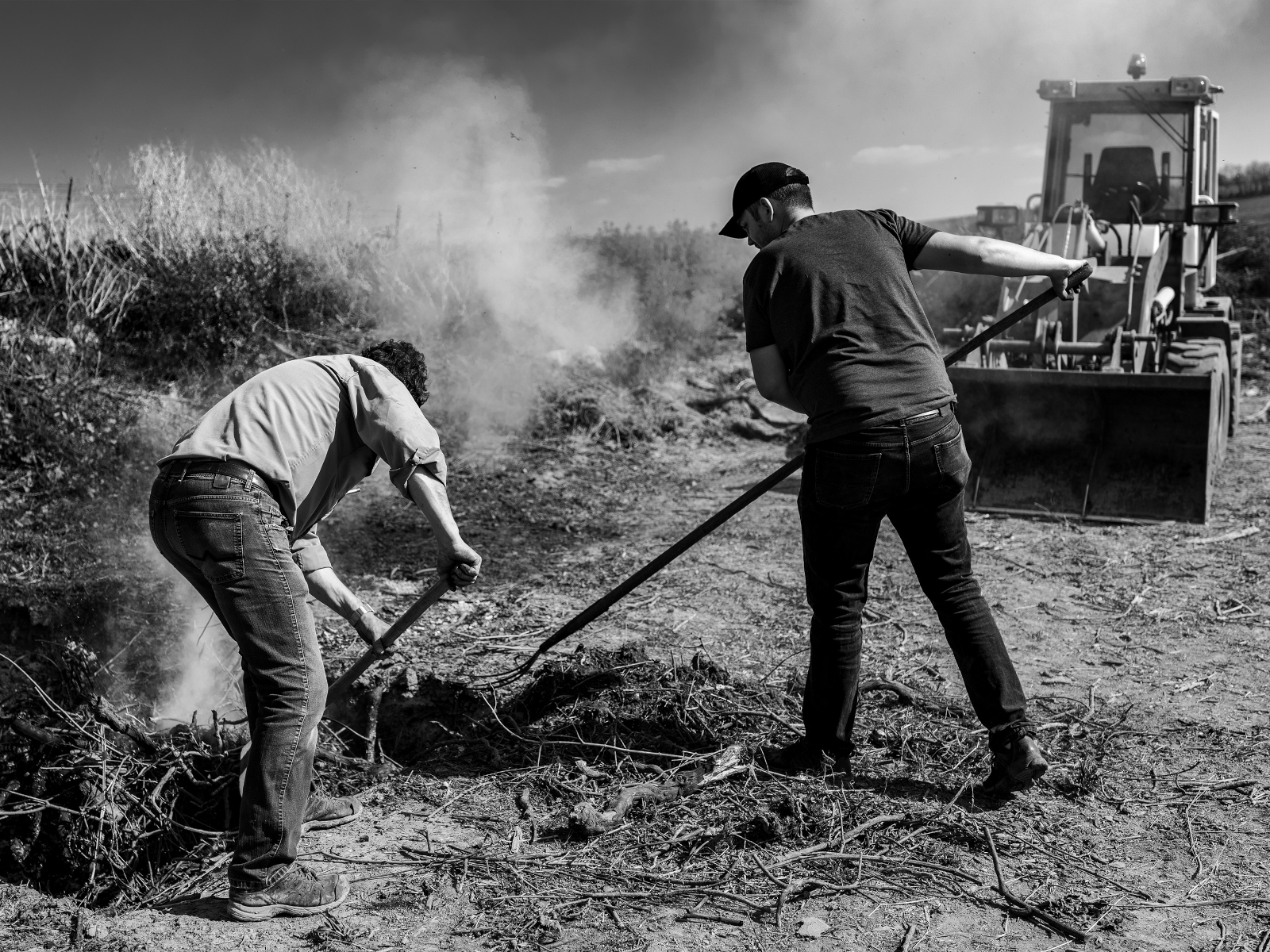
Making the Terra preta

Researchers stumbled upon a mystery in the Amazon region at the end of the 19th century. They discovered a deeply dark but extremely fertile soil that did not at all fit the natural conditions. The soils of the tropical rainforests are anything but rich in nutrients. The researchers found answers among the Indians. Already thousands of years ago, the indigenous people practised shifting cultivation with slash-and-burn methods. To improve the fertility of the soil, they mixed plant residues, composted waste, human faeces and plant charcoal. Through fermentation, this resulted in terra preta, the black earth.

Terra-preta substrates have meanwhile also experienced an upswing. In scientific trials with cultivated plants, the Free University of Berlin demonstrated a predominantly positive effect, provided that the plants tolerate the increased pH value of the soil.

In the Wonnegau region of Rhinehessen, winemaker Andreas Huppert discovered terra preta for his vineyards a few years ago. Together with his son Leonhard, he even produces the black soil himself. The vegetable charcoal is mainly made from the wood of vines and is mixed with green cuttings, straw and horse manure and fermented airtight under a foil with the help of microorganisms.

The Hupperts have already spread their terra preta on more than ten hectares. For Andreas Huppert, however, the focus is not on improving the growing conditions for his vines. Rather, he is concerned with contributing to sustainability. At some point, his winery should become climate-neutral. Terra preta has enormous potential in this respect. Through its worldwide use in agriculture, “biochar” could bind seven per cent of the world's CO2 emissions annually, or about 2.6 billion tonnes. By comparison, that's more than a third of the emissions generated by road transport (2019: 18%).

andreas-und-leonhard-huppert.jpgImage: Weingut Huppert
Andreas and Leonhard Huppert

In addition, terra preta can contribute to strengthening the resilience of vineyards in times of climate change. In the dry Wonnegau region, which has little rainfall, the vines in the terra preta plants benefit not least from the greater water retention capacity, which is becoming increasingly important for the supply of nutrients in the increasingly hot and dry summers. At the same time, the black soil protects the vineyards from erosion caused by the more frequent heavy rainfall events.

We tasted three wines from the Huppert winery that come from terra preta vineyards.

The Chardonnay was left on the fine lees for a long time, was only weakly sulfured and bottled unfiltered. The yellow-fruity aroma profile reveals the grape variety, but this complex and self-contained stoic from the house of Huppert has absolutely nothing in common with the reductive Chardonnays with forced and striking flinty notes that have become fashionable.

The rosé could not be more idiosyncratic. Not a fresh and slender terrace wine for hot summer days, but an expressive wine full of character with exotic fruit and fine tannins, which are somewhat reminiscent of an orange wine.

die-schwarze-erde.jpgImage: Weingut Huppert
The black earth of the Indios

The cuvée of Portugieser and Pinot Noir is exciting. In addition to the red wine typical aromas of cherry and dried plum, light-fruity and floral components surprise here, which embed themselves harmoniously. The tannins are of high quality and already show a good polymerisation in the relatively young stage, which is beneficial for the further development.

The wines at a glance

Huppert

Wormser Straße 7
67598 Gundersheim
Germany
Phone: +49 6244 308
Internet: www.terrapretawein.de
E‑mail: post@terrapretawein.de

Portrait and all wines

WinewhitedryChardonnay

2021 Terra Petra Chardonnay Landwein trocken

Germany

Landwein Rhein • Geschützte geografische Angabe (g. g. A.)

Lot number 2021-1619 • 13.5 % vol alcohol

16🯅

Tasted on 10 April 2023 by Werner Elflein

Intense straw to golden yellow with gray tones. Shows quite clear despite unfiltered filling. Pronounced “tears”. Quite expansive, yellow-fruited aroma of yellow apple and pear. In addition, aromas of chamomile blossom and wild mushroom. In the background glowing wood. In the mouth the conclusive continuation of the olfactory perception. More horizontally than vertically laid out, with powerful but not too lush stature. Warming phenols, on the tongue some strawberry in an otherwise yellow-fruited context. Well balanced by an elegant and fresh acidity of the 2021 vintage. Excellent length. Successful and individual interpretation of the grape variety.

WinerosédryBlauer Spätburgunder

2021 Terra Petra Spätburgunder Rosé Landwein trocken

Germany

Landwein Rhein • Geschützte geografische Angabe (g. g. A.)

Lot number 2021-1719 • 12 % vol alcohol

16🯅

Tasted on 1 April 2023 by Werner Elflein

Pale salmon pink. Complex bouquet containing aromas of pink grapefruit as well as tropical fruits, especially passion fruit and pineapple. In the background, even sweet cherry is perceptible. On the tongue, a little honey spiciness with a pleasantly consistent dry taste. Focused and expressive. Reminiscent of an orange wine due to the fine tannins. Piquant hints of acidity. Clear cranberry note in the finish, then more sweet cherry again in the finish. Very good length.

WinereddryBlauer PortugieserBlauer Spätburgunder

2020 Terra Petra Portugieser & Spätburgunder Qualitätswein trocken

Germany

Rheinhessen • Geschützte Ursprungsbezeichnung (g. U.)

Amtliche Prüfungsnummer 4290103 19 22 • 13.5 % vol alcohol

16🯅

Tasted on 6 April 2023 by Werner Elflein

Dark, largely opaque cherry red. Vegetable-spicy scent of cherry and dried plum with a discreet yellow-fruity component reminiscent of peach and apricot. In addition, nuances of white blossoms and some smoked bacon. On the palate, the olfactory experience finds its conclusive continuation. The warming fruit is surrounded by chocolaty tannins that are already mellow and melt well on the tongue. Harmoniously integrated acidity. Excellent length. Shows floral notes again in the finish.

Symbols
🯅The rating of the wine is based on a single taster. The taster is named in the context of the rating. The tasting was either open or blind. In case of a blind tasting, it is explicitly labelled as such.
🯅🯅The rating of the wine is based on two tasters. The tasters are named in the context of the rating. The tasting was carried out according to the four-eyes principle, in which both tasters agree on a joint rating.
🯅🯅🯅The rating is based on a tasting by our jury and indicates the Mean value calculated by us from the individual ratings of the tasters. Our mean value is based on the median.
The wine was evaluated in a blind tasting. We have strict rules for blind tastings. The tasters do not receive any information that would allow them to identify the wines. The tasters are only given access to further information that goes beyond the subject matter if it is absolutely necessary for understanding the wines.
🕓We only had limited time to taste the wine  - typically during an open tasting event, such as a wine fair. It was therefore not possible to observe the development of the wine in the glass over a longer period of time. The informative value of our rating may therefore be limited under certain circumstances.
The wine was tasted as a barrel sample or before an official test number (Amtliche Prüfungsnummer or Staatliche Prüfnummer) was issued. We only accept samples of unfilled wines in exceptional cases, and then only if we can assume sufficient stability in the bottle for a period of at least three months.
During our tasting, the wine showed conspicuous sensory characteristics. This does not necessarily have to be a wine fault. We categorise the quality and quantity of the abnormality and include it in the rating. Wine faults such as cork taint or an atypical ageing generally lead to a complete rejection.
Tastings that refer to the same bottle of a wine are visually summarised by a dotted line.