
Weinfreaks.de uses cookies. Cookies are text files that we temporarily store on your computer. Our cookies are technically necessary to provide you with the functions and content of our website. In principle, we do not share them with third parties. We only reserve the right to evaluate your cookies for the purpose of danger prevention. According to the law applicable in the European Union, we do not require your explicit consent for this. For reasons of transparency, we would nevertheless like to inform you about the use of cookies. For further information, please refer to our Privacy Policy.

Login

Register

Forgot your password?

Shopping cart

Your shopping cart is empty.

To take out a subscription or shop at weinfreaks.de, you must be registered and logged in.

Search on website

Weinhof Herrenberg

Schoden • Germany
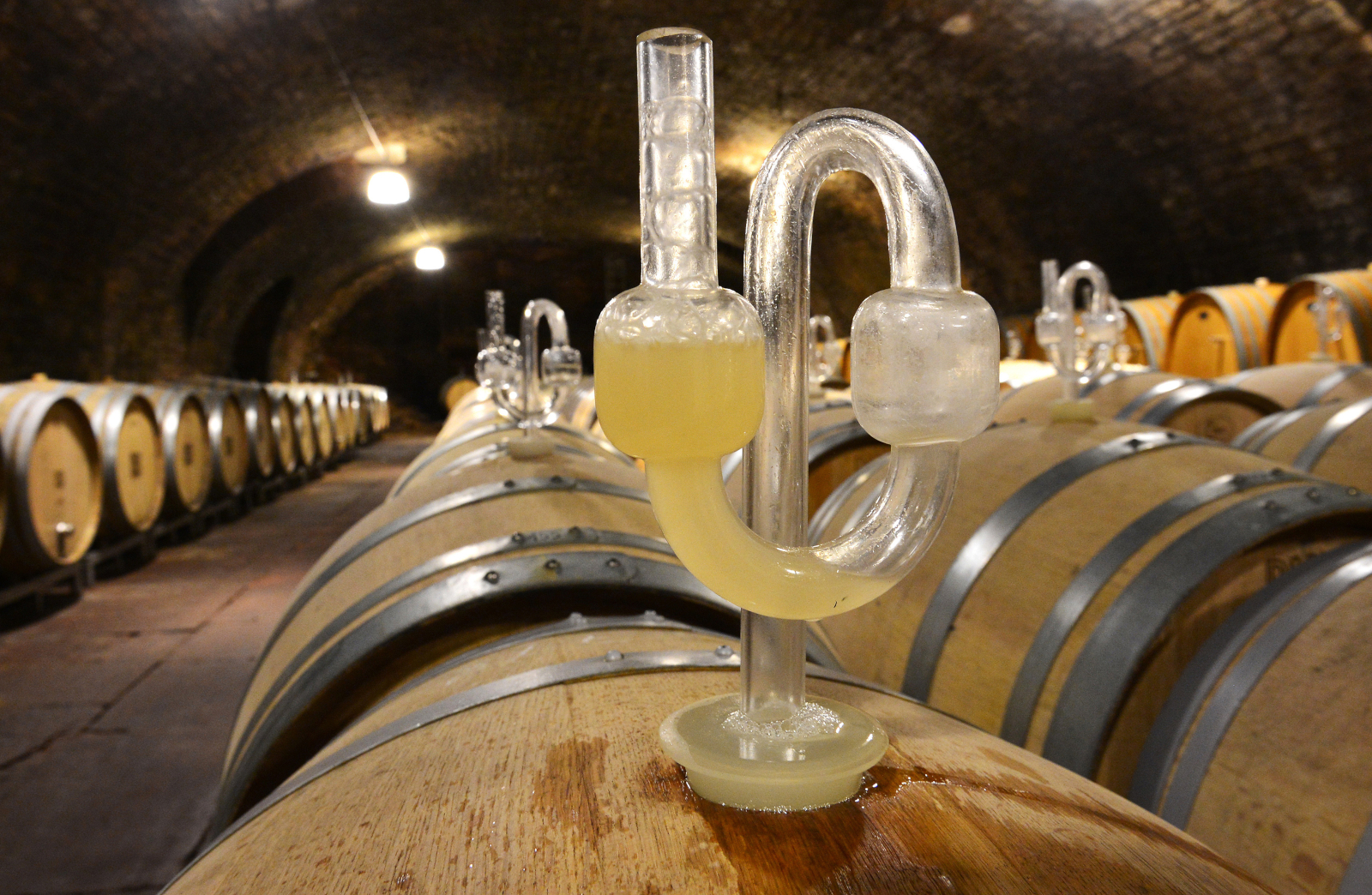
weingueter.jpgImage: Deutsches Weininstitut
Barrique cellar in a German winery (Symbolic photo)

Weinhof Herrenberg

Hauptstraße 80
54441 Schoden
Germany
Phone: +49 6581 1258
Fax: +49 6581 995438
Internet: www.weinhof-herrenberg.com
E‑mail: info@lochriesling.de

The wines at a glance

WinewhitedryWeißer Riesling

2015 Riesling Qualitätswein

Germany

Mosel • Geschützte Ursprungsbezeichnung (g. U.)

Amtliche Prüfungsnummer 3553050 2 16 • 12.5 % vol alcohol

18🯅🯅🯅

Tasted on 6 March 2017 by our jury

17🯅

Tasted on 6 March 2017 by Werner Elflein

16🯅

Tasted on 29 November 2016 by Werner Elflein

Winewhitedry to off-dryWeißer Riesling

2015 Ockfen Bockstein Steinmetzrausch Riesling Qualitätswein

Germany

Mosel • Geschützte Ursprungsbezeichnung (g. U.)

Amtliche Prüfungsnummer 3553050 4 16 • 13 % vol alcohol

17🯅

Tasted on 17 November 2016 by Werner Elflein

16🯅🯅🯅

Tasted on 2 July 2016 by our jury

17.5🯅

Tasted on 2 July 2016 by Werner Elflein

Winewhitedry to off-dryWeißer Riesling

2015 Wiltingen Schlangengraben Riesling Alte Reben Qualitätswein

Germany

Mosel • Geschützte Ursprungsbezeichnung (g. U.)

Amtliche Prüfungsnummer 3553050 6 16 • 13 % vol alcohol

18🯅

Tasted on 20 November 2016 by Werner Elflein

19🯅

Tasted on 20 November 2016 by Werner Elflein

Straw yellow with white-golden reflections. Opulent, at the same time extremely differentiated and invigorating aroma of highly ripe yellow fruits. On the tongue, a world-class Riesling is revealed. Almost everything fits together perfectly here. Harmonious acidity that bridges the gap between the image of a traditional, acidic Saar Riesling and that which emerges when ripe grapes from vines planted mostly in the 19th century can be harvested in a potential top vintage. Delicate fruit sweetness provides a wonderful balance. Complex, animating and with great depth. The Riesling from the Wiltinger Schlangengraben still shows its closed, rather reductive side. Nevertheless, I can hardly keep my fingers off the glass. A few years in the bottle will do it good. Excellent length and sustainability.

18🯅🯅🯅

Tasted on 24 September 2016 by our jury

18🯅

Tasted on 24 September 2016 by Werner Elflein

Winewhitedry to off-dryWeißer Riesling

2015 “Saartyr” Riesling Qualitätswein

Germany

Mosel • Geschützte Ursprungsbezeichnung (g. U.)

Amtliche Prüfungsnummer 3553050 3 16 • 13 % vol alcohol

16.5🯅

Tasted on 23 November 2016 by Werner Elflein

16.5🯅🯅🯅

Tasted on 24 September 2016 by our jury

16.5🯅

Tasted on 24 September 2016 by Werner Elflein

Winewhitedry to off-dryWeißer Riesling

2015 Cruv Riesling Qualitätswein

Germany

Mosel • Geschützte Ursprungsbezeichnung (g. U.)

Amtliche Prüfungsnummer 3553050 5 16 • 13 % vol alcohol

17.5🯅🯅🯅

Tasted on 6 March 2017 by our jury

17.5🯅

Tasted on 6 March 2017 by Werner Elflein

16🯅

Tasted on 4 December 2016 by Werner Elflein

Winewhitedry to off-dryWeißer Riesling

2011 Ockfen Bockstein Riesling Qualitätswein

Germany

Mosel • Geschützte Ursprungsbezeichnung (g. U.)

Amtliche Prüfungsnummer 3553050 9 12 • 14 % vol alcohol

17🯅

Tasted on 26 January 2020 by Werner Elflein

Green golden yellow. Delicate floral, expansive and dense bouquet of highly ripe yellow, partly candied fruits. Creamy, opulent and juicy fullness of fruit, off-dry taste, moderate acidity, adequate sweetness, excellent length, good aftertaste.

17🯅

Tasted on 4 July 2017 by Werner Elflein

17.5🯅

Tasted on 4 July 2017 by Julia Elflein

Winewhitedry to off-dryWeißer Riesling

2011 “Quasaar” Riesling Qualitätswein

Germany

Mosel • Geschützte Ursprungsbezeichnung (g. U.)

Amtliche Prüfungsnummer 3553050 7 12 • 11.5 % vol alcohol

17.5🯅

Tasted on 3 June 2017 by Werner Elflein

17.5🯅

Tasted on 3 June 2017 by Julia Elflein

Winewhitedry to off-dryWeißer Riesling

2011 “Saartyr” Riesling Qualitätswein

Germany

Mosel • Geschützte Ursprungsbezeichnung (g. U.)

Amtliche Prüfungsnummer 3553050 5 12 • 13 % vol alcohol

18🯅

Tasted on 22 May 2017 by Werner Elflein

18🯅

Tasted on 22 May 2017 by Julia Elflein

WinewhitesweetWeißer Riesling

2011 “Contessaar” Riesling Qualitätswein

Germany

Mosel • Geschützte Ursprungsbezeichnung (g. U.)

Amtliche Prüfungsnummer 3553050 8 12 • 10 % vol alcohol

16.5🯅

Tasted on 11 April 2020 by Werner Elflein

WinewhitesweetWeißer Riesling

2011 Schoden Herrenberg Riesling Auslese

Germany

Mosel • Geschützte Ursprungsbezeichnung (g. U.)

Amtliche Prüfungsnummer 3553050 12 12 • 6.5 % vol alcohol

20🯅

Tasted on 7 January 2026 by Werner Elflein

Only 60 half bottles exist of this wine, which received the official test number for a Beerenauslese. Because Manfred Loch did not consider it a typical Beerenauslese, he downgraded it and labelled it as “hochfeinste Auslese” on the bottle label – which was already the first administrative offence under wine law. The second offence concerned the alcohol content, which at 6.5 % met the minimum requirements for a Beerenauslese (5.5 %) but not those for an Auslese (7 %). However, due to the small number of bottles, the wine inspection authority never found it out and was therefore unable to withdraw the wine from circulation. The offences are now time-barred. This is a good thing, because it means that the label can state what is not legally correct, but ultimately much closer to the truth. For I do not find the style of a classic Beerenauslese here. Instead, to my understanding, this is indeed an Auslese in its finest and most perfect form. In this respect, Manfred Loch made the right decision and deserves applause for his civil disobedience. In the glass, a dark, reddish amber colour sets the mood for a sweet wine with a high botrytis factor. Accordingly, the nose offers complex aromas of dried fig, fresh date, dried peach, nuances of ripe mango and other tropical fruits, accompanied by caramel, nougat, roasted hazelnut and pistache. After such a concentrated aroma, one expects a corresponding opulence on the palate. However, this does not materialise. With extraordinary lightness, the “hochfeinste Auslese” glides over the tongue and lives up to its name. It reveals facets that require attentive examination of this elixir. It is like a piece of music for which one must prick up one's ears and darken the room in order to capture not only the superficial sound image, but also all the quiet nuances. Concentration is omnipresent, but here it is translated not into heaviness, but into pure elegance and finesse. The piquant acidity slowly emerges from the background and subtly restrains the sweetness that is natural to a Beerenauslese. Impressive length and seemingly endless finish.

Winewhitedry to off-dryWeißer Riesling

2008 Wiltingen Schlangengraben Riesling Alte Reben Qualitätswein

Germany

Mosel • Geschützte Ursprungsbezeichnung (g. U.)

Amtliche Prüfungsnummer 3553050 3 09 • 12 % vol alcohol

19🯅

Tasted on 1 January 2012 by Werner Elflein

Greenish straw yellow with white-golden reflections. Viscous, with strikingly pronounced adhesion of the wine to the rim of the glass. Deep and herbaceous, impressively mineral bouquet with distinct, slightly ethereal and yellow fruity hints of mint and rhubarb pie. On the tongue with a powerful and punchy attack, which, however, is not defined by the rather moderate alcohol of 12 %. In the mouth, it focuses on both concentration and elegance. Delicately creamy, but wonderfully subtle, with fine acidity and delicate sweetness. Subtle notes of tangerine on the palate. Excellent length, seemingly never-ending finish. Unmistakably a great Riesling.

WinewhitesweetWeißer Riesling

1999 Schoden Herrenberg Riesling Auslese No. 6

Germany

Mosel-Saar-Ruwer • Geschützte Ursprungsbezeichnung (g. U.)

Amtliche Prüfungsnummer 3553050 6 00 • 8.5 % vol alcohol

18.5🯅

Tasted on 29 July 2023 by Werner Elflein

Bright amber gold colour. Subtle hints of dried fruit on the nose. Also herbal, spicy and vegetal flavours. Green tea. Spices reminiscent of the Advent and Christmas season. A classic Auslese which, at 8.5 % vol alcohol, does not emphasise sweetness and does not fit into the context of the 1980s at all. Despite its full-bodied stature, it is excellently balanced thanks to its ripe, perfectly integrated acidity. Radiates great inner peace. Excellent length, long finish.

WinewhitesweetWeißer Riesling

1999 Schoden Herrenberg Riesling Auslese No. 7

Germany

Mosel-Saar-Ruwer • Geschützte Ursprungsbezeichnung (g. U.)

Amtliche Prüfungsnummer 3553050 7 00 • 8 % vol alcohol

19.5🯅

Tasted on 23 December 2025 by Werner Elflein

In 1999, Claudia and Manfred Loch harvested no grapes with less than 100 °Oe. The entire Riesling harvest could, or rather had to, be processed exclusively into noble sweet wines. An Auslese from Schoden Herrenberg was downgraded to a Spätlese. The Lochs also bottled seven different Auslesen from their local vineyard, numbered in ascending order according to must weight and thus correlating with the degree of botrytis infection of the berries. The Auslese No. 7, as the leader of this phalanx, leaves me amazed and almost speechless. It is difficult to put into words what seems to elude any linguistic expression. The natural cork crumbles slightly, but with a little care it can be removed from the bottle without breaking. In the glass, No. 7 appears in a bright, luminous amber orange. Despite the high must weight, I do not perceive any opulence on the nose. On the contrary, the botrytis leaves the stage to the fruit. The finest apricot jam and a hint of marzipan form a transparent aromatic layer that rises above a mineral foundation with hints of wet slate and a delicate floral base. A weightless concentration announces itself and, as expected, becomes reality on the tongue. Fruitiness without weight. Everything seems coherent, although this lightness should actually seem paradoxical given the botrytis load. The ripe, lively acidity remains in the background, merely hinting at its presence, as if it had decided not to disturb the delicate structure by rushing forward impetuously. The sweetness, analytically undoubtedly in higher spheres, also blends in harmoniously without developing the dominance of a de facto Beerenauslese. Supreme elegance and complexity. Excellent length. Outstanding depth. A masterpiece of German Riesling culture.

Symbols
🯅The rating of the wine is based on a single taster. The taster is named in the context of the rating. The tasting was either open or blind. In case of a blind tasting, it is explicitly labelled as such.
🯅🯅The rating of the wine is based on two tasters. The tasters are named in the context of the rating. The tasting was carried out according to the four-eyes principle, in which both tasters agree on a joint rating.
🯅🯅🯅The rating is based on a tasting by our jury and indicates the Mean value calculated by us from the individual ratings of the tasters. Our mean value is based on the median.
The wine was evaluated in a blind tasting. We have strict rules for blind tastings. The tasters do not receive any information that would allow them to identify the wines. The tasters are only given access to further information that goes beyond the subject matter if it is absolutely necessary for understanding the wines.
🕓We only had limited time to taste the wine  - typically during an open tasting event, such as a wine fair. It was therefore not possible to observe the development of the wine in the glass over a longer period of time. The informative value of our rating may therefore be limited under certain circumstances.
The wine was tasted as a barrel sample or before an official test number (Amtliche Prüfungsnummer or Staatliche Prüfnummer) was issued. We only accept samples of unfilled wines in exceptional cases, and then only if we can assume sufficient stability in the bottle for a period of at least three months.
During our tasting, the wine showed conspicuous sensory characteristics. This does not necessarily have to be a wine fault. We categorise the quality and quantity of the abnormality and include it in the rating. Wine faults such as cork taint or an atypical ageing generally lead to a complete rejection.
Tastings that refer to the same bottle of a wine are visually summarised by a dotted line.