


Weinfreaks.de uses cookies. Cookies are text files that we temporarily store on your computer. Our cookies are technically necessary to provide you with the functions and content of our website. In principle, we do not share them with third parties. We only reserve the right to evaluate your cookies for the purpose of danger prevention. According to the law applicable in the European Union, we do not require your explicit consent for this. For reasons of transparency, we would nevertheless like to inform you about the use of cookies. For further information, please refer to our Privacy Policy.

Login

Register

Forgot your password?

Shopping cart

Your shopping cart is empty.

To take out a subscription or shop at weinfreaks.de, you must be registered and logged in.

Search on website

Nik Weis – St. Urbans-Hof

Leiwen • Germany
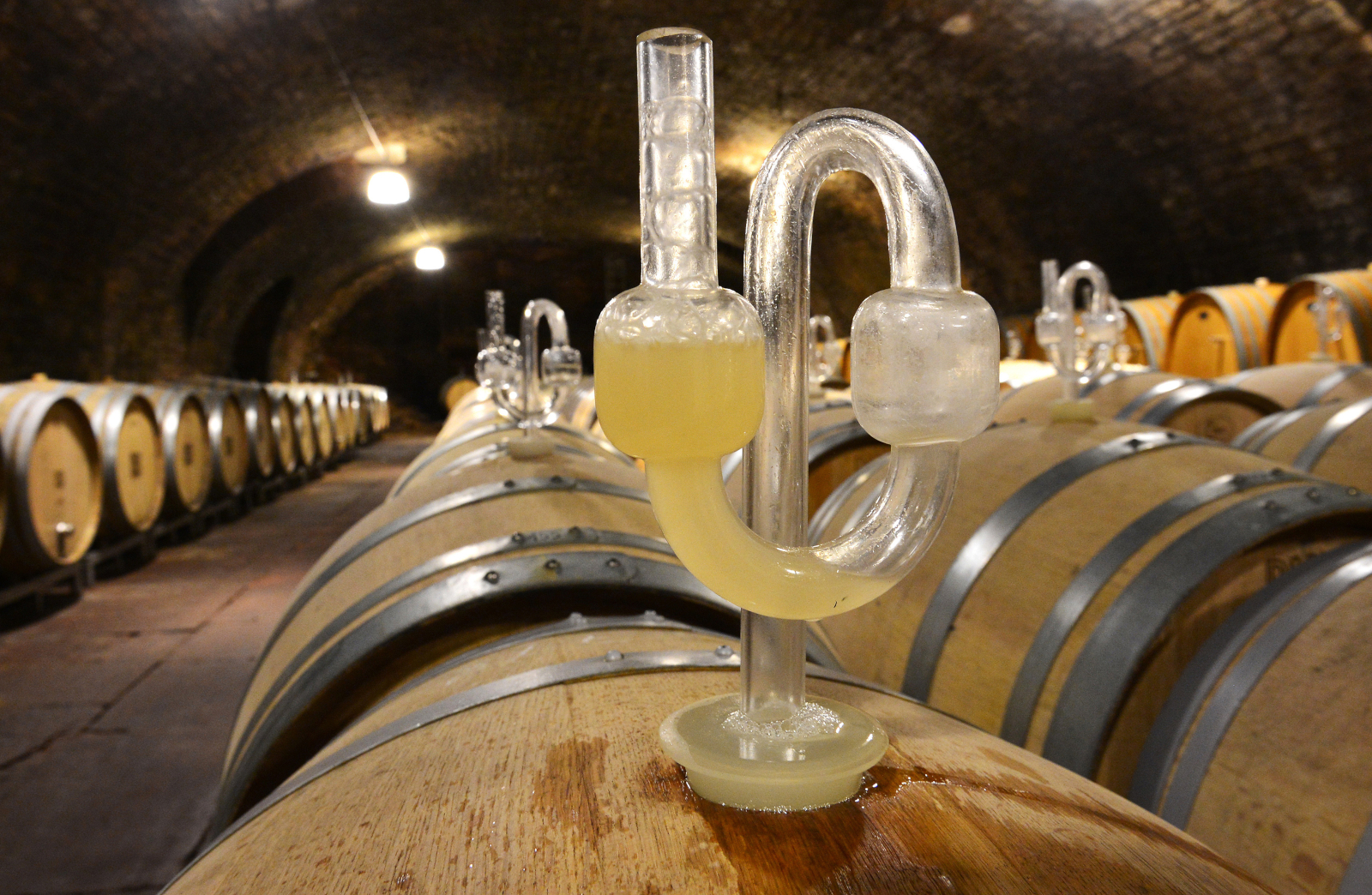
weingueter.jpgImage: Deutsches Weininstitut
Barrique cellar in a German winery (Symbolic photo)

Nik Weis – St. Urbans-Hof

Urbanusstraße 16
54340 Leiwen
Germany
Phone: +49 6507 9377-0
Fax: +49 6507 9377-30
Internet: www.nikweis.com
E‑mail: info@nikweis.com

The wines at a glance

WinewhitedryWeißer Riesling

2012 Leiwen Laurentiuslay Riesling Qualitätswein trocken

VDP.GROSSE LAGE® / VDP.GROSSES GEWÄCHS®

Germany

Mosel • Geschützte Ursprungsbezeichnung (g. U.)

Amtliche Prüfungsnummer 3529290 15 13 • 12.5 % vol alcohol

17.5🯅

Tasted on 5 March 2017 by Werner Elflein

17🯅

Tasted on 5 March 2017 by Julia Elflein

17.5🯅🯅🯅

Tasted on 2 July 2016 by our jury

17.5🯅

Tasted on 2 July 2016 by Werner Elflein

Winewhiteoff-dryWeißer Riesling

2012 Leiwen Laurentiuslay Riesling Qualitätswein feinherb

Germany

Mosel • Geschützte Ursprungsbezeichnung (g. U.)

Amtliche Prüfungsnummer 3529290 16 13 • 11 % vol alcohol

13🯅🯅🯅

Tasted on 13 February 2017 by our jury

13🯅

Tasted on 13 February 2017 by Werner Elflein

13🯅

Tasted on 24 January 2017 by Werner Elflein

WinewhitedryWeißer Riesling

2011 Leiwen Laurentiuslay Riesling Qualitätswein trocken

Großes Gewächs Verband Deutscher Prädikatsweingüter e. V.

Germany

Mosel • Geschützte Ursprungsbezeichnung (g. U.)

Amtliche Prüfungsnummer 3529290 38 12 • 12.5 % vol alcohol

15.5🯅

Tasted on 30 January 2017 by Werner Elflein

15.5🯅

Tasted on 30 January 2017 by Julia Elflein

16🯅🯅🯅

Tasted on 27 August 2016 by our jury

16.5🯅

Tasted on 27 August 2016 by Werner Elflein

WinewhitesweetWeißer Riesling

2002 Ockfen Bockstein Riesling Eiswein

Germany

Mosel-Saar-Ruwer • Geschützte Ursprungsbezeichnung (g. U.)

Amtliche Prüfungsnummer 3529290 29 03 • 6.5 % vol alcohol • bottled under the former name St. Urbans-Hof

17.5🯅

Tasted on 4 July 2008 by Werner Elflein

Pure gold. Concentrated ice wine scent of flowers and dried citrus fruits. On the palate also hints of red berries. Impressive fruit density with just 6.5 % vol alcohol. Very sweet and creamy, but also with a ripe and piquant acidity. Enormous depth. Endless long finish.

WinewhitesweetWeißer Riesling

2001 Leiwen Laurentiuslay Riesling Auslese

Germany

Mosel-Saar-Ruwer • Geschützte Ursprungsbezeichnung (g. U.)

Amtliche Prüfungsnummer 3529290 21 02 • 10 % vol alcohol • bottled under the former name St. Urbans-Hof

16🯅

Tasted on 9 December 2008 by Werner Elflein

Bright golden yellow. Complex bouquet, clearly marked by spontaneous fermentation. Smells of mandarin orange, orange peel, apricot and nectarine. On the palate with animating fruit and spicy minerality. Excellent balance between harmoniously integrated, ripe acidity and rather moderate sweetness. Tastes almost off-dry. With all elegance not really a lightweight (10 % vol alcohol). Discreet roasted aromas in the very long finish. Complex, herbal-spicy aftertaste.

WinewhitesweetWeißer Riesling

2001 Piesport Goldtröpfchen Riesling Auslese

Germany

Mosel-Saar-Ruwer • Geschützte Ursprungsbezeichnung (g. U.)

Amtliche Prüfungsnummer 3529290 12 02 • 9 % vol alcohol • bottled under the former name St. Urbans-Hof

16🯅

Tasted on 18 January 2009 by Werner Elflein

Straw yellow with golden white reflections. Wild, animating scent of yellow apricot and herbal sugar. On the palate, despite 9 % vol alcohol, quite slender for an Auslese and without noticeable botrytis. Piquant acidity, not overly sweet. Would still win with a little more fructose. Herbal-spicy minerality. Very good length. Peachy, slightly bitter aftertaste.

Symbols
🯅The rating of the wine is based on a single taster. The taster is named in the context of the rating. The tasting was either open or blind. In case of a blind tasting, it is explicitly labelled as such.
🯅🯅The rating of the wine is based on two tasters. The tasters are named in the context of the rating. The tasting was carried out according to the four-eyes principle, in which both tasters agree on a joint rating.
🯅🯅🯅The rating is based on a tasting by our jury and indicates the Mean value calculated by us from the individual ratings of the tasters. Our mean value is based on the median.
The wine was evaluated in a blind tasting. We have strict rules for blind tastings. The tasters do not receive any information that would allow them to identify the wines. The tasters are only given access to further information that goes beyond the subject matter if it is absolutely necessary for understanding the wines.
🕓We only had limited time to taste the wine  - typically during an open tasting event, such as a wine fair. It was therefore not possible to observe the development of the wine in the glass over a longer period of time. The informative value of our rating may therefore be limited under certain circumstances.
The wine was tasted as a barrel sample or before an official test number (Amtliche Prüfungsnummer or Staatliche Prüfnummer) was issued. We only accept samples of unfilled wines in exceptional cases, and then only if we can assume sufficient stability in the bottle for a period of at least three months.
During our tasting, the wine showed conspicuous sensory characteristics. This does not necessarily have to be a wine fault. We categorise the quality and quantity of the abnormality and include it in the rating. Wine faults such as cork taint or an atypical ageing generally lead to a complete rejection.
Tastings that refer to the same bottle of a wine are visually summarised by a dotted line.