
Markus Altenburger
Jois • Austria
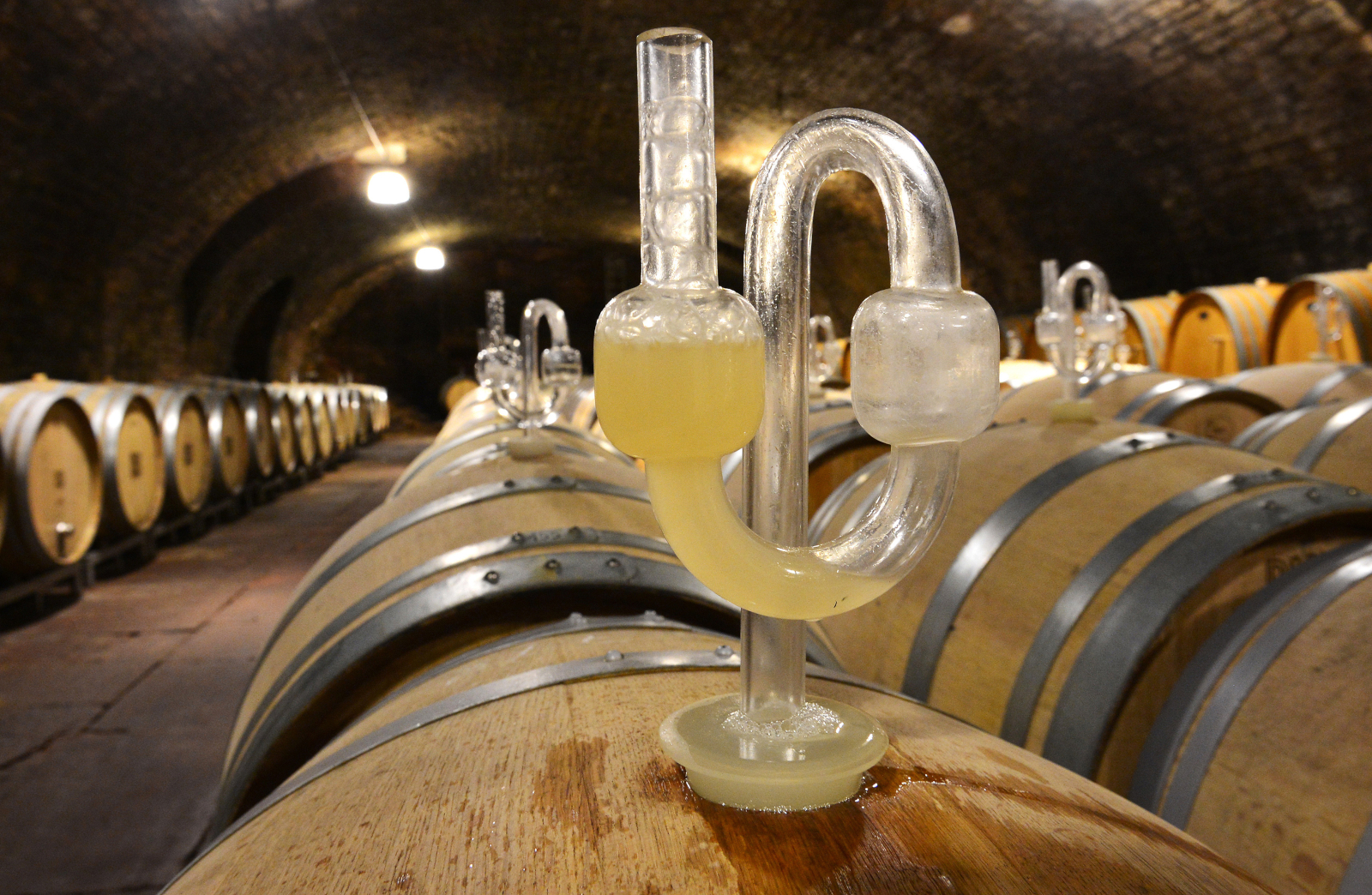
Image: Flodur63 via Wikipedia, published under the licence Creative Commons Attribution-ShareAlike 4.0 International (size and cropping adjusted)Markus Altenburger
Untere Hauptstraße 62
7093 Jois
Austria
Phone: +43 2160 71089
Fax: +43 2160 71089
Internet: www.markusaltenburger.com
E‑mail: contact@markusaltenburger.com
Markus Altenburger's winery is situated at the foot of the Leitha Mountains in Jois, between Lake Neusiedl and slopes of the Leithaberg. The focus here is not on maximising the wine's power, but on accurately reflecting its origin and terroir. The distinctive terroir, with its limestone and slate soils – shaped by the interplay of Lake Neusiedl and the Leitha Mountains – forms the basis for characterful wines with complexity, minerality and elegance.
Alongside the Blaufränkisch wines, the white wines – particularly Chardonnay – also occupy an important place in the range. The single-vineyard wines, in particular, possess remarkable ageing potential.
Markus Altenburger took over the family business in Jois and systematically developed it into a winery wholly dedicated to the origin and distinctive characteristics of its vineyards. The focus has increasingly shifted towards the estate's own vineyards and natural viticultural practices. Today, it is Blaufränkisch in particular that defines the estate's identity – a grape variety that is able to develop its distinctive spice, minerality and depth on the stony limestone and slate soils of the Leithaberg.
The Wines at a Glance
2008 Ried Gritschenberg Blaufränkisch Qualitätswein
Austria
Weinland ↳ Burgenland • Geschützte Ursprungsbezeichnung (g. U.)
Staatliche Prüfnummer N 5624 10 • 14 % vol alcohol
Symbols
| 🯅 | The rating of the wine is based on a single taster. The taster is named in the context of the rating. The tasting was either open or blind. In case of a blind tasting, it is explicitly labelled as such. |
| 🯅🯅 | The rating of the wine is based on two tasters. The tasters are named in the context of the rating. The tasting was carried out according to the four-eyes principle, in which both tasters agree on a joint rating. |
| 🯅🯅🯅 | The rating is based on a tasting by our jury and indicates the Mean value calculated by us from the individual ratings of the tasters. Our mean value is based on the median. |
| ⚖ | The wine was evaluated in a blind tasting. We have strict rules for blind tastings. The tasters do not receive any information that would allow them to identify the wines. The tasters are only given access to further information that goes beyond the subject matter if it is absolutely necessary for understanding the wines. |
| 🕓 | We only had limited time to taste the wine - typically during an open tasting event, such as a wine fair. It was therefore not possible to observe the development of the wine in the glass over a longer period of time. The informative value of our rating may therefore be limited under certain circumstances. |
| ⛬ | The wine was tasted as a barrel sample or before an official test number (Amtliche Prüfungsnummer or Staatliche Prüfnummer) was issued. We only accept samples of unfilled wines in exceptional cases, and then only if we can assume sufficient stability in the bottle for a period of at least three months. |
| ▲ | During our tasting, the wine showed conspicuous sensory characteristics. This does not necessarily have to be a wine fault. We categorise the quality and quantity of the abnormality and include it in the rating. Wine faults such as cork taint or an atypical ageing generally lead to a complete rejection. |
| Tastings that refer to the same bottle of a wine are visually summarised by a dotted line. |