
Weinfreaks.de uses cookies. Cookies are text files that we temporarily store on your computer. Our cookies are technically necessary to provide you with the functions and content of our website. In principle, we do not share them with third parties. We only reserve the right to evaluate your cookies for the purpose of danger prevention. According to the law applicable in the European Union, we do not require your explicit consent for this. For reasons of transparency, we would nevertheless like to inform you about the use of cookies. For further information, please refer to our Privacy Policy.

Login

Register

Forgot your password?

Shopping cart

Your shopping cart is empty.

To take out a subscription or shop at weinfreaks.de, you must be registered and logged in.

Search on website

Lithos

Oberwesel • Germany
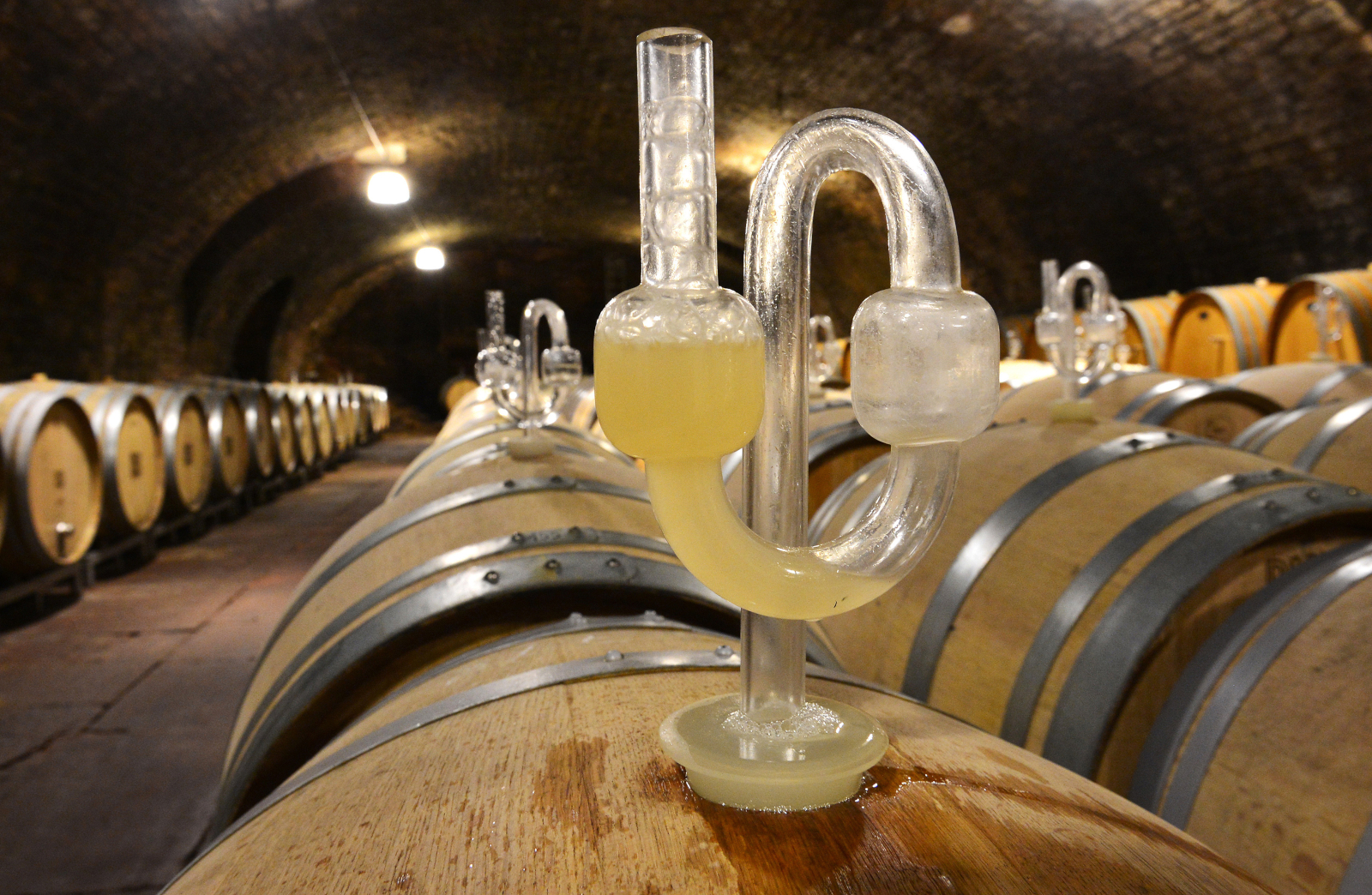
weingueter.jpgImage: Deutsches Weininstitut
Barrique cellar in a German winery (Symbolic photo)

Lithos

Am Weinberg 78
55430 Oberwesel
Germany
Phone: +49 6744 9491031
Internet: www.weingutlithos.de
E‑mail: info@weingutlithos.de

The wines at a glance

WinewhitedryWeißer Riesling

2018 Engehöll Bernstein Riesling Qualitätswein trocken

Germany

Mittelrhein • Geschützte Ursprungsbezeichnung (g. U.)

Amtliche Prüfungsnummer 1677049 3 19 • 12.5 % vol alcohol

14🯅🯅🯅

Tasted on 14 January 2020 by our jury

16🯅

Tasted on 14 January 2020 by Werner Elflein

15🯅🯅🯅

Tasted on 3 September 2019 by our jury

16🯅

Tasted on 3 September 2019 by Werner Elflein

15🯅🯅

Tasted on 11 August 2019 by Werner Elflein and Julia Elflein

15🯅

Tasted on 10 August 2019 by Werner Elflein

Christos Christian Theodoropoulos' Riesling seems to pull out almost all the stops in order to avoid evaluation. Only the lemon-yellow colour of the wine is unambiguous. But already at the bouquet it seems as if during the 72 hours in which we observe its development, it will take on almost all possible states of taste. From citrus aromas to nutty notes and liquorice, everything seems to be there, so we cannot find a descriptive text that does any justice to this wine. In the mouth it presents itself to us as a typical cool climate Riesling. A fine acidity, substance and length are recognizable. We therefore regard the adjoining evaluation only as a rough thumb bearing.

WinewhitedryWeißer Riesling

2018 Riesling Qualitätswein trocken

Germany

Mittelrhein • Geschützte Ursprungsbezeichnung (g. U.)

Amtliche Prüfungsnummer 1677049 2 19 • 13 % vol alcohol

15.5🯅🯅🯅

Tasted on 10 September 2019 by our jury

15.5🯅

Tasted on 10 September 2019 by Werner Elflein

15🯅🯅

Tasted on 6 September 2019 by Werner Elflein and Julia Elflein

15🯅

Tasted on 5 September 2019 by Werner Elflein

Bright, luminous lemon yellow. Fruity bouquet of stone fruit and apricot. In the beginning still quite much carbonic acid. Cool fruit, surprising acidity, shows suspense and draught on the palate. Very good length. Requires some air.

Winewhiteoff-dryWeißer Riesling

2018 Engehöll Goldemund Riesling Qualitätswein feinherb

Germany

Mittelrhein • Geschützte Ursprungsbezeichnung (g. U.)

Amtliche Prüfungsnummer 1677049 6 19 • 12.5 % vol alcohol

15.5🯅🯅🯅

Tasted on 14 January 2020 by our jury

16.5🯅

Tasted on 14 January 2020 by Werner Elflein

WinewhitesweetWeißer Riesling

2018 Riesling Auslese

Germany

Mittelrhein • Geschützte Ursprungsbezeichnung (g. U.)

Amtliche Prüfungsnummer 1677049 8 19 • 8.5 % vol alcohol

15.5🯅🯅🯅

Tasted on 28 January 2020 by our jury

16🯅

Tasted on 28 January 2020 by Werner Elflein

16🯅🯅

Tasted on 17 October 2019 by Werner Elflein and Julia Elflein

16🯅

Tasted on 16 October 2019 by Werner Elflein

Lemon yellow. Clear nose with a fine pineapple scent. Juicy fruit fullness, yet light on the palate. Elegant acidity, very good length.

WinewhitedryWeißer Riesling

2017 Engehöll Bernstein Riesling Qualitätswein trocken

Germany

Mittelrhein • Geschützte Ursprungsbezeichnung (g. U.)

Amtliche Prüfungsnummer 1677049 2 18 • 12.5 % vol alcohol

16🯅🯅🯅

Tasted on 10 September 2019 by our jury

16🯅

Tasted on 10 September 2019 by Werner Elflein

16.5🯅🯅

Tasted on 24 August 2019 by Werner Elflein and Julia Elflein

16.5🯅

Tasted on 23 August 2019 by Werner Elflein

Pale yellow with white gold reflections. Slightly reductive, cool citrus scent. On the palate with earthy and stony notes, changing between floral and spicy aromas. Ethereal component. Fine and elegant. Very good length.

WinewhitedryWeißer Riesling

2017 Riesling Qualitätswein trocken

Germany

Mittelrhein • Geschützte Ursprungsbezeichnung (g. U.)

Amtliche Prüfungsnummer 1677049 1 18 • 12 % vol alcohol

15.5🯅🯅🯅

Tasted on 10 September 2019 by our jury

15🯅

Tasted on 10 September 2019 by Werner Elflein

15🯅🯅

Tasted on 24 August 2019 by Werner Elflein and Julia Elflein

15.5🯅

Tasted on 23 August 2019 by Werner Elflein

An extraordinarily good Riesling of the entry class, which is hardly inferior to the vineyard wine from the Engehöller Bernstein. Pale yellow with white-golden reflections. Cool scent of yellow apple and Williams pear. Convincing on the palate with expressive minerality and a mature, excellently integrated acidity. Very good length.

WinereddryBlauer Spätburgunder

2017 Spätburgunder Qualitätswein trocken

Germany

Mittelrhein • Geschützte Ursprungsbezeichnung (g. U.)

Amtliche Prüfungsnummer 1677049 11 19 • 12.5 % vol alcohol

14🯅🯅🯅

Tasted on 8 October 2019 by our jury

15🯅

Tasted on 8 October 2019 by Werner Elflein

15.5🯅🯅

Tasted on 30 September 2019 by Werner Elflein and Julia Elflein

We often have doubts as to whether our methodical approach of observing wines over several days for a well-founded evaluation does not overshoot the mark a little. In most cases, our four-eyes-review does not bring any new insights. But there are wines that are worth waiting for. The Spätburgunder from the Lithos winery is such a case. Although already tasted on the first day in numerous variants (without aeration, with aeration, in the Ovarius decanter), it only reveals itself to us after more than 24 hours in the open bottle. The apple aromas perceptible on the previous day now clearly recede, a soft berry note now dominates the nose and continues on the palate. All in all, the wine now appears much more coherent. We reward this development with an accordingly clear adjustment of our score.

14🯅

Tasted on 29 September 2019 by Werner Elflein

Bright purple garnet. Very unconventional Pinot Noir, which shows pronounced apple aromas in the nose and would therefore be a perfect candidate for a black glass tasting. On the tongue and palate, however, it is completely different: delicate roast flavours, red berry aromas, sweet fruit, but also with a slightly acidic component. Good length.

Symbols
🯅The rating of the wine is based on a single taster. The taster is named in the context of the rating. The tasting was either open or blind. In case of a blind tasting, it is explicitly labelled as such.
🯅🯅The rating of the wine is based on two tasters. The tasters are named in the context of the rating. The tasting was carried out according to the four-eyes principle, in which both tasters agree on a joint rating.
🯅🯅🯅The rating is based on a tasting by our jury and indicates the Mean value calculated by us from the individual ratings of the tasters. Our mean value is based on the median.
The wine was evaluated in a blind tasting. We have strict rules for blind tastings. The tasters do not receive any information that would allow them to identify the wines. The tasters are only given access to further information that goes beyond the subject matter if it is absolutely necessary for understanding the wines.
🕓We only had limited time to taste the wine  - typically during an open tasting event, such as a wine fair. It was therefore not possible to observe the development of the wine in the glass over a longer period of time. The informative value of our rating may therefore be limited under certain circumstances.
The wine was tasted as a barrel sample or before an official test number (Amtliche Prüfungsnummer or Staatliche Prüfnummer) was issued. We only accept samples of unfilled wines in exceptional cases, and then only if we can assume sufficient stability in the bottle for a period of at least three months.
During our tasting, the wine showed conspicuous sensory characteristics. This does not necessarily have to be a wine fault. We categorise the quality and quantity of the abnormality and include it in the rating. Wine faults such as cork taint or an atypical ageing generally lead to a complete rejection.
Tastings that refer to the same bottle of a wine are visually summarised by a dotted line.